Kids' zone
You have explored 0 of 67 pages in Kids' zone Track your progress
Shooting stars, space rocks, craters, comets and the Moon. Read true stories, ask questions, learn new words, print pictures to colour and play games. Everything here is true, and there are no adverts.
Shooting-star countdown
The next meteor shower is on its way. The sky calendar shows when.
For older explorers: more about this shower
Shower: Meteor showers
Peak night:
How many:
Watching tip:
Dates and times are for the UK. A shower's peak can come a few hours early or late, so the nights either side are worth a look too.
How to watch for shooting stars · Sky calendar · Countdown page

New here? Start with these 3 stories
These three are short, true and easy to read. You can look at them with a grown-up, or on your own.
This week’s explorer task
A new task every Monday: a story to read, a sheet to finish or a game to play. Every explorer gets the same task this week.
Turn on JavaScript to see this week’s task, or start with the stories.
Picked for your age group.
Your tick is private. It stays on this device, and in your account if you are signed in. Nobody else can see it.
Missions from Meteor and Robot
Meteor and Robot have set you 12 small missions. Each one is a story, a sheet or a game that is already here. Missions marked Quick are short ones for little explorers.
Meteor’s missions
- Read the story “What is a shooting star?”Find out what makes the bright streak in the night sky. Quick
- Colour in the shooting star sheetPrint it out and make the shooting star as bright as you like. Quick
- Read the picture book Pip the PebbleFollow a tiny rock on its long journey to Earth. Quick
- Find out in Kids ask: do shooting stars make a noise?Look under Shooting stars and tap the question to see the answer. Quick
- Read “How to watch for shooting stars”Then ask a grown-up if you can watch the sky together on a clear night.
- Play Space word search onceHunt for the hidden space words.
Robot’s missions
- Colour in the crater sheetPrint it out and colour the crater and the rocks around it. Quick
- Play Memory match onceFlip the cards and find all the pairs. Quick
- Read “Hoba, the biggest meteorite”Find out why nobody has ever moved it.
- Look up the word “radiant” in the word bookTap R at the top of the word book to jump straight there.
- Play Sort the space rocksSort real meteorites into their groups. Can you beat a museum expert?
- Try the meteorite detective checklist with a grown-upCheck a rock for clues, but never lick, scratch, break or heat it.
Your ticks stay on this device. They are not sent anywhere or shown to anyone else.
For grown-ups: these missions are for children. A child can tick them off on this device without an account, or while signed in to their own child account.
Stories
20 short, true stories to read together or alone.
 Ages 5+
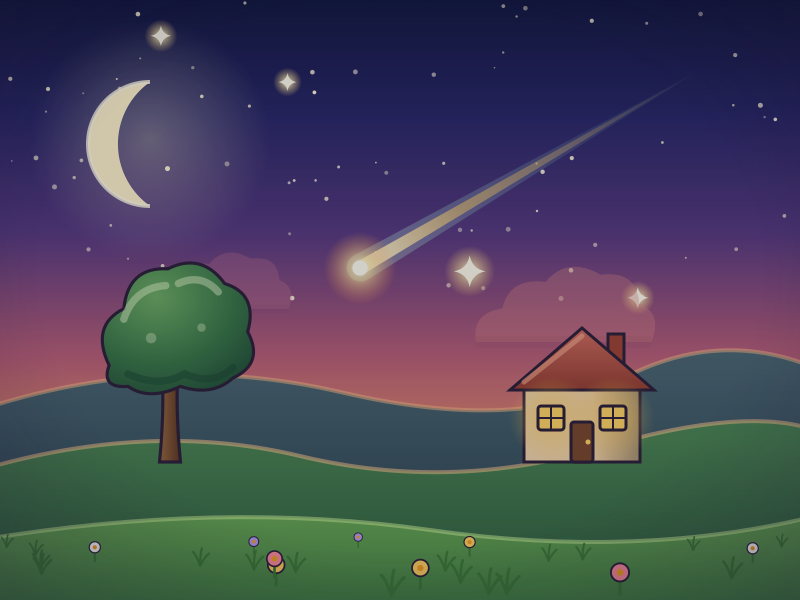
What is a shooting star?
A quick streak of light flashes across the night sky. What made it?
 Ages 5+
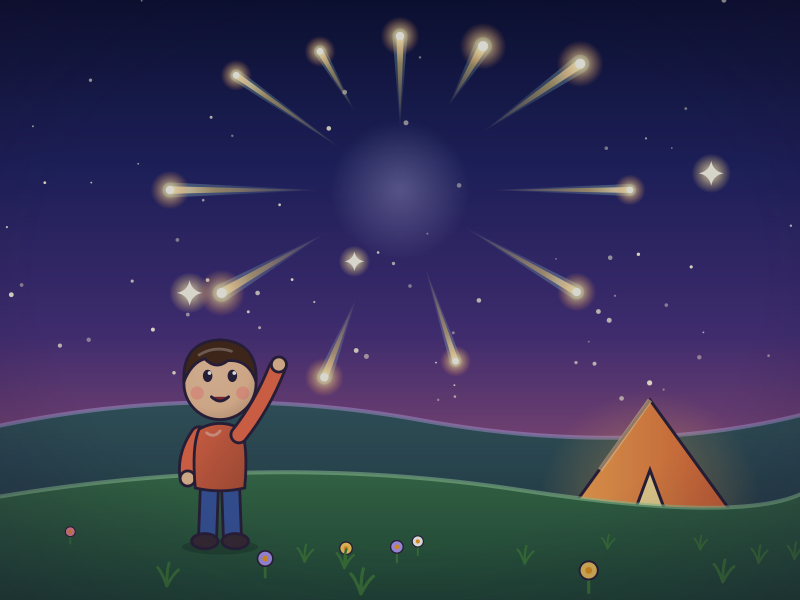
Why do shooting stars come in showers?
On some nights of the year, you can see many more shooting stars than usual. Here is why.
 Ages 5+
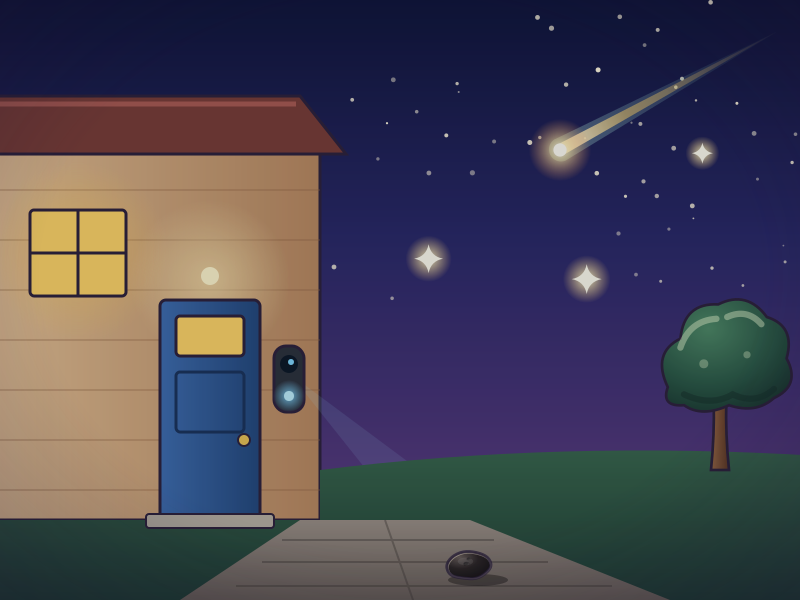
The stone on the driveway
The true story of a space rock that landed in a small English town in 2021.
 Ages 5+
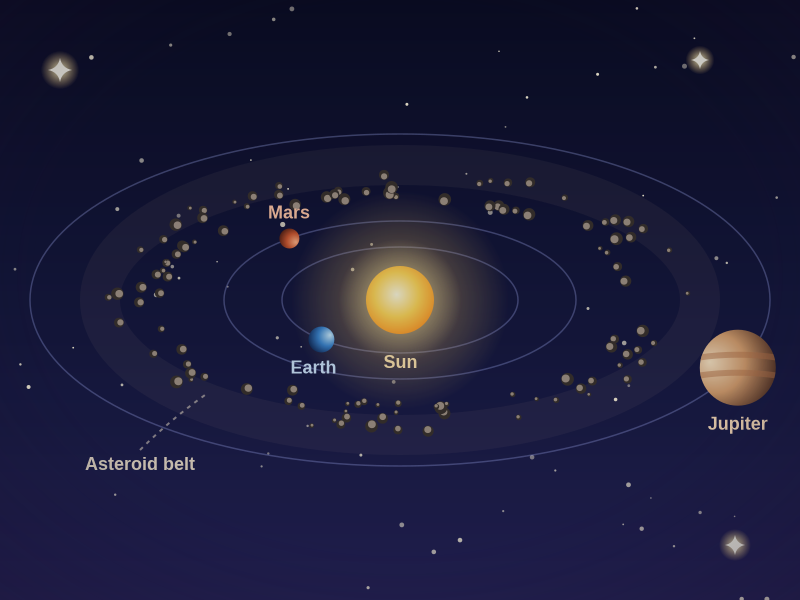
Where do meteorites come from?
A meteorite is a rock from space that lands on Earth. But where in space?
 Ages 5+
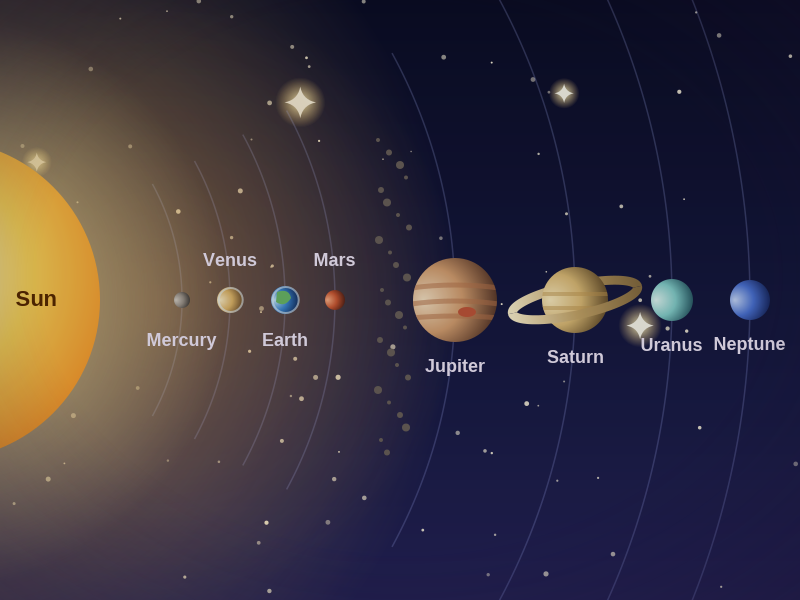
The Solar System family
Meet the Sun and the eight planets that travel around it.
 Ages 5+
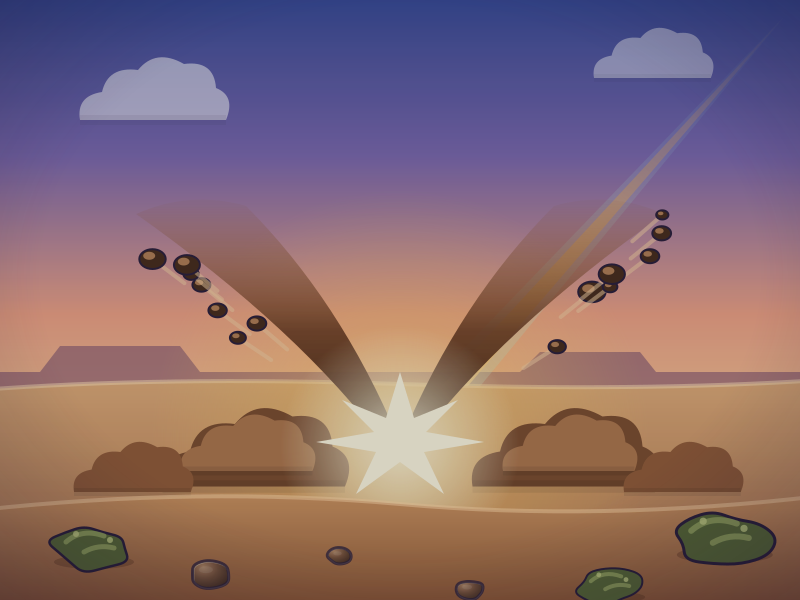
How is a crater made?
A big space rock can make a giant hole in the ground. Here is how it happens.
 Ages 5+
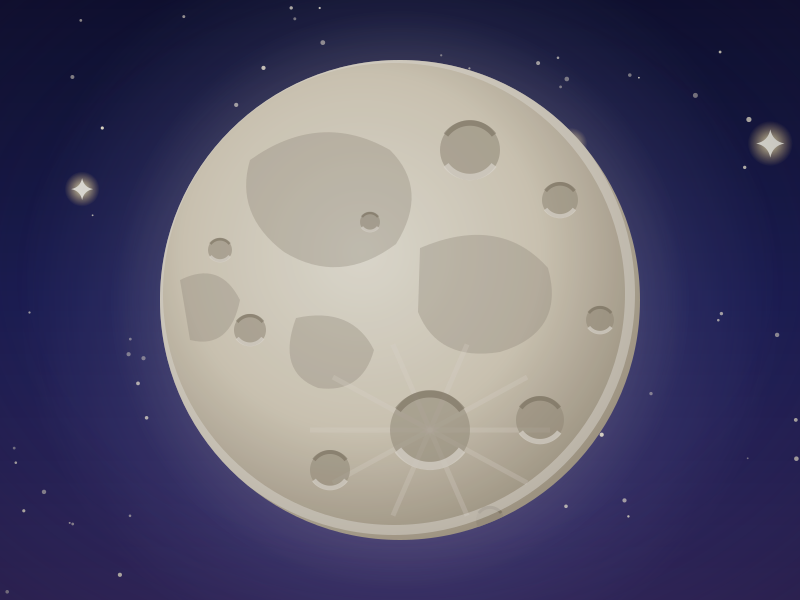
The Moon's craters
Look at the Moon through binoculars and you will see it is covered in round holes.
 Ages 5+
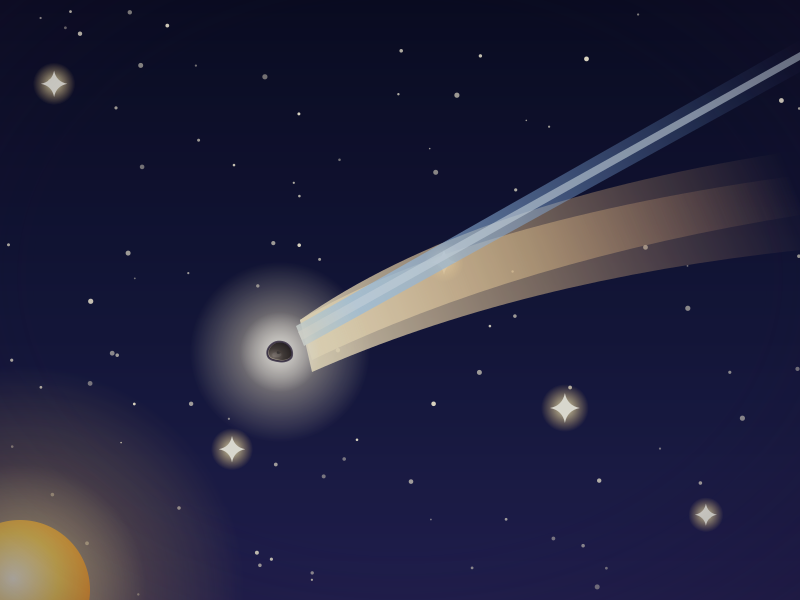
Comets: icy visitors
Comets are giant lumps of ice and dust that grow glowing tails.
 Ages 5+
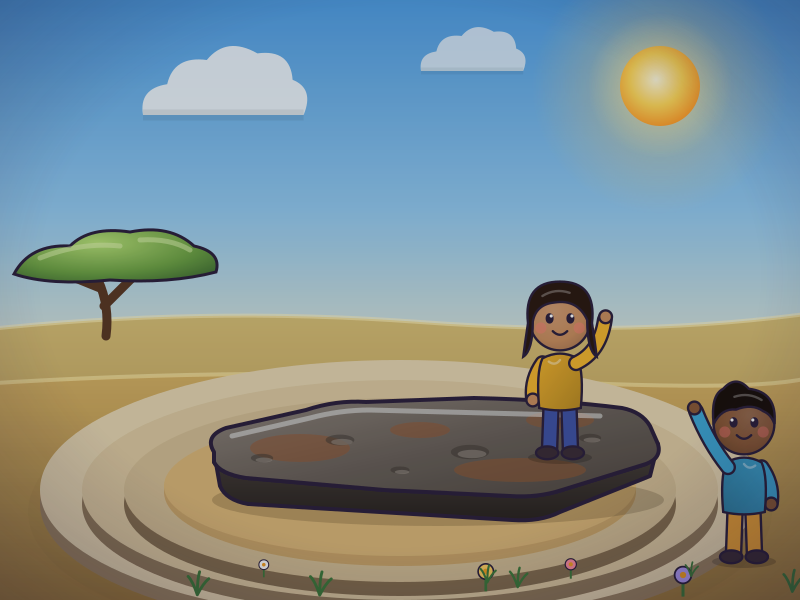
Hoba, the biggest meteorite
The heaviest meteorite ever found is so big it has never been moved.
 Ages 7+
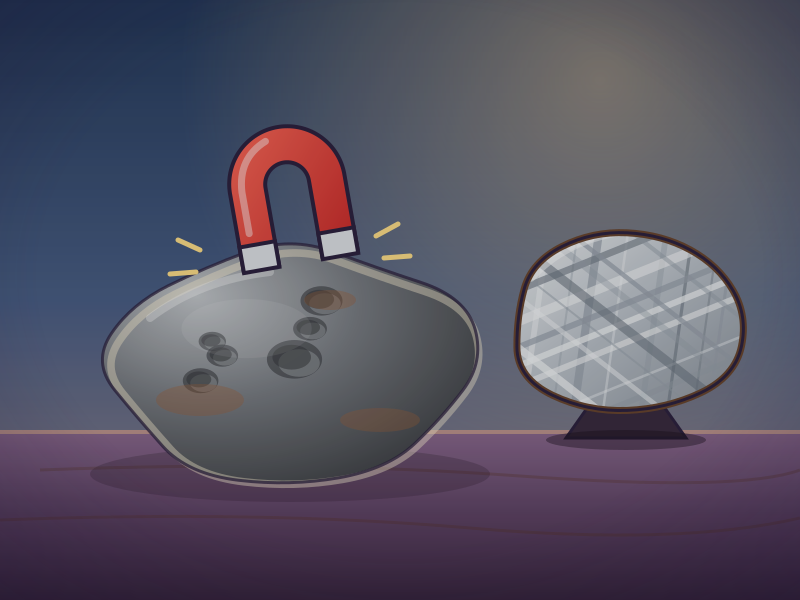
Metal from space
Some meteorites are made almost entirely of metal. Where did it come from?
 Ages 7+
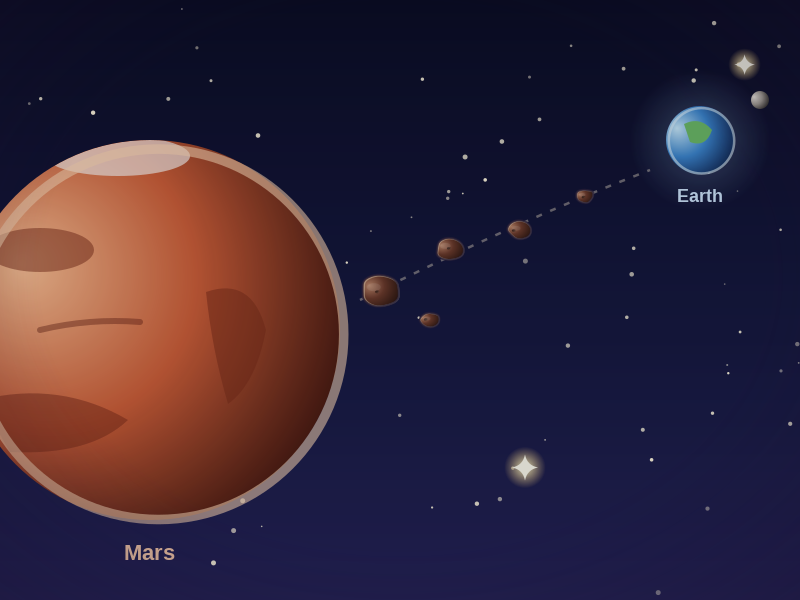
Rocks from Mars
Nobody has brought back a rock from Mars yet. But some Mars rocks have come to us by themselves.
 Ages 5+
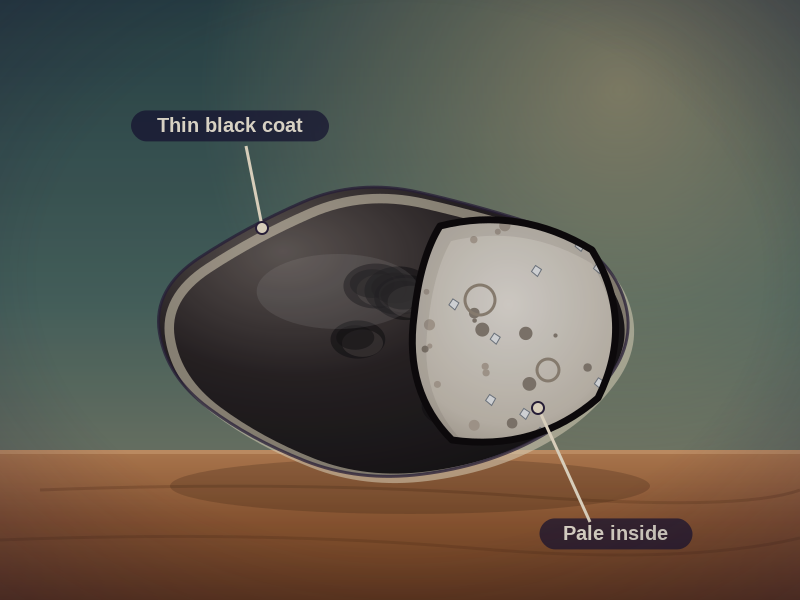
Why is a meteorite black outside?
Many fresh meteorites have a thin, dark coat. It tells the story of their fiery fall.
 Ages 7+
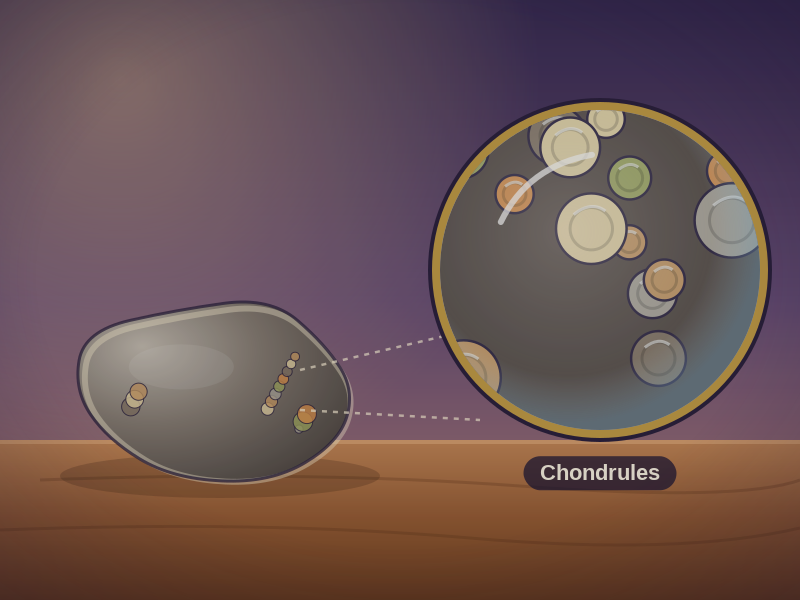
The oldest rocks you can hold
Most meteorites are older than any rock on Earth.
 Ages 7+
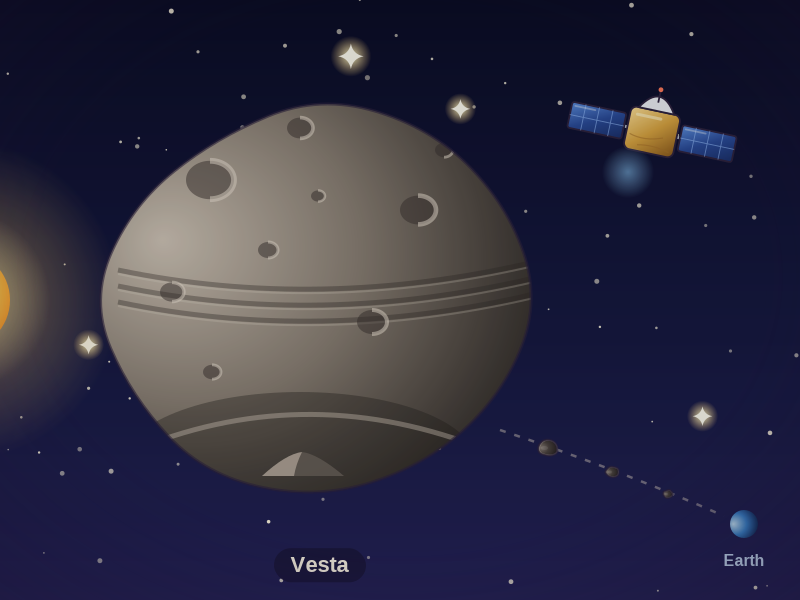
Vesta and the howardites
This website is named after a kind of meteorite. Here is where they come from.
 Ages 7+
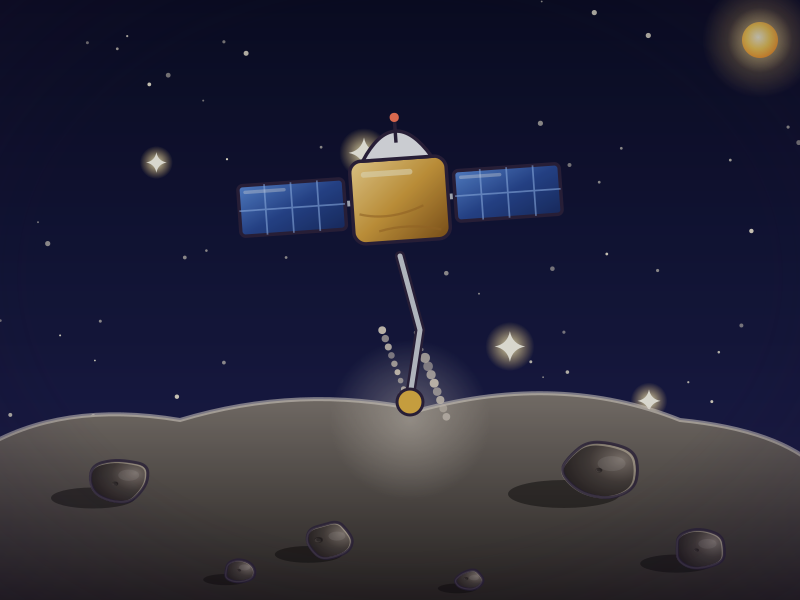
A spacecraft brings home asteroid dust
In 2020 a Japanese spacecraft delivered a gift from space: a little capsule of asteroid dust.
 Ages 7+
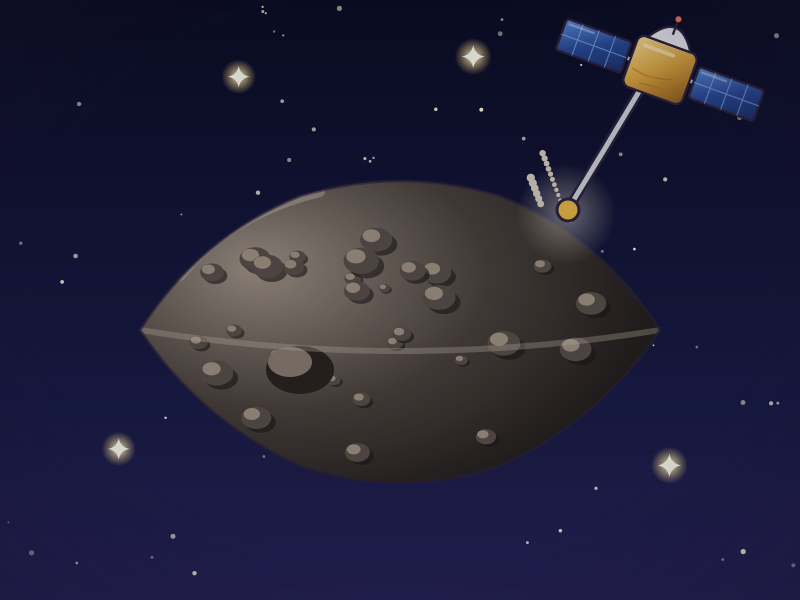
Bennu's surprise
When a spacecraft touched the asteroid Bennu, the surface acted more like a ball pit than solid ground.
 Ages 5+
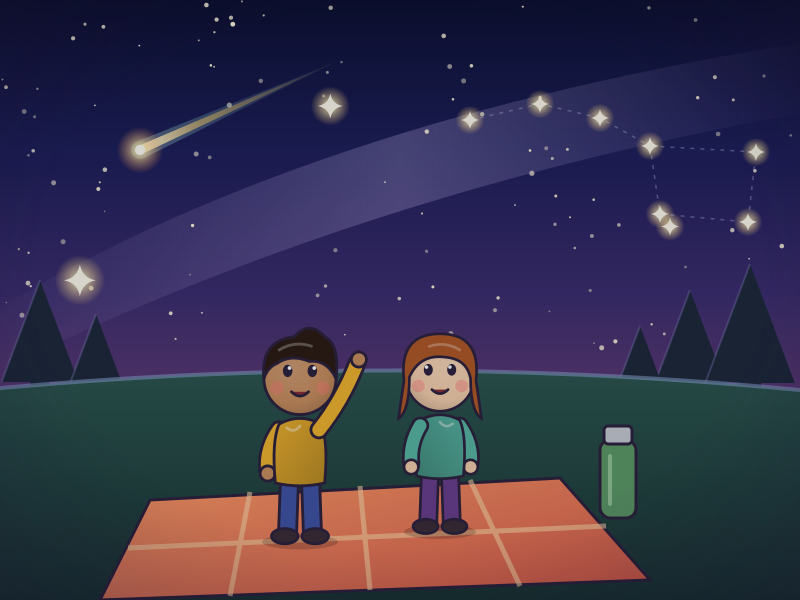
How to watch for shooting stars
You do not need a telescope to see shooting stars. Just your eyes, a dark sky and a little patience.
 Ages 7+
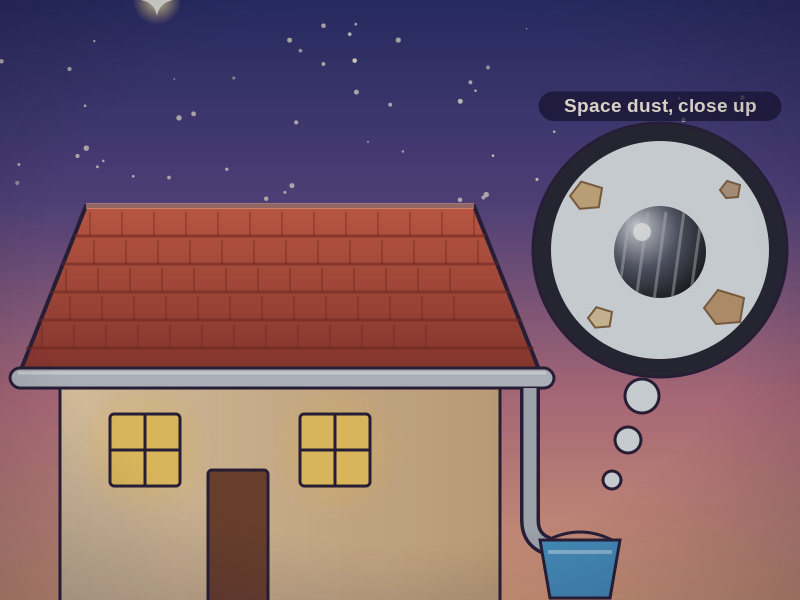
Space dust on your roof
Tiny pieces of space land all over the world, all the time. Some might be on your roof.
 Ages 7+
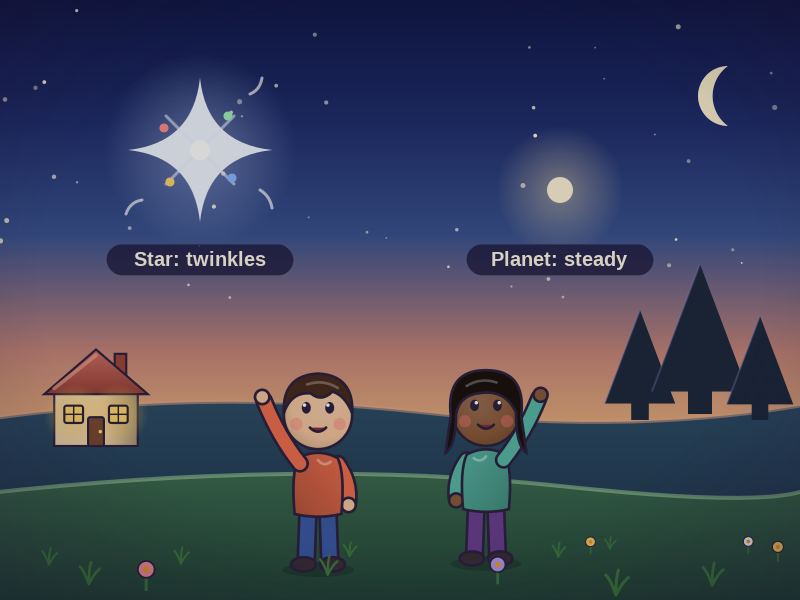
Is it a planet or a star?
Some of the brightest points in the night sky are not stars at all. They are planets.
 Ages 7+
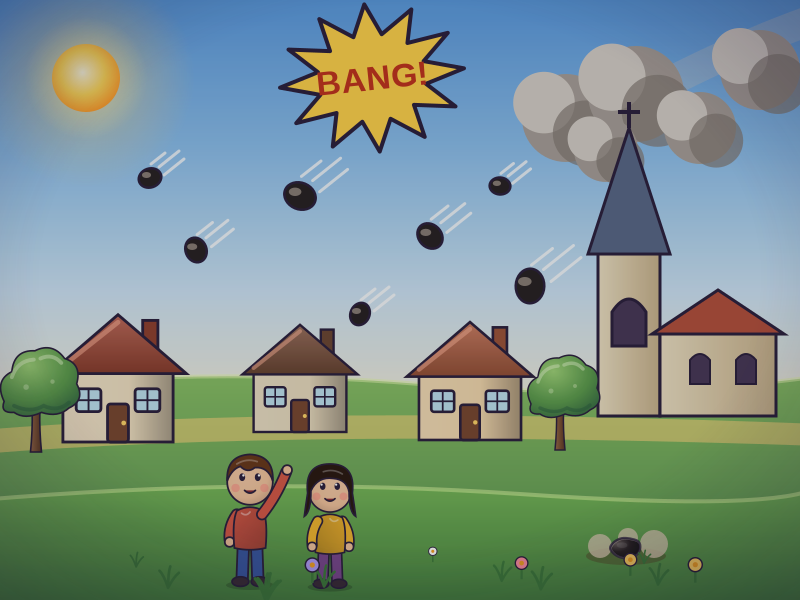
The day stones fell on L'Aigle
Over 200 years ago, most scientists did not believe stones could fall from the sky. Then came L'Aigle.
Kids ask
Do shooting stars make a noise?
Almost never. They happen about 100 kilometres up, much too far away to hear. Very rarely, a huge fireball makes a rumble or a boom that arrives a few minutes later, like distant thunder.
Are meteorites hot when they land?
Usually not. The outside melts during the fall, but only for a few seconds. The inside stays cold from space, so most meteorites are only warm or even cold when they land.
Why are craters round?
A big space rock hits so fast that it acts like an explosion. The explosion pushes out evenly in every direction, so the hole is round, even when the rock comes in at a slant.
Why does the Moon change shape?
The Moon does not really change shape. The Sun always lights up half of it. As the Moon travels around Earth, we see different amounts of the lit half, from a thin crescent to a full Moon. The whole cycle takes about 29 and a half days.
Which planet is the brightest in the sky?
Venus. After the Sun and the Moon, it is the brightest natural object in the sky. It is often seen low in the west after sunset, or low in the east before sunrise.
Can children help scientists?
Yes! Counting shooting stars during a meteor shower, and reporting a bright fireball with an adult, both give scientists useful information. Lots of discoveries have been made by people who simply looked carefully.
Myths busted
Are shooting stars really stars? Are meteorites red-hot when they land? Find out the truth about 15 space rock myths.
Word book
What is a radiant? What does lunar mean? The word book explains 80 space words in a sentence or two.
How big is this space rock?
Put a tiny chondrule next to a pinhead, or the giant Hoba meteorite next to a car. Compare space rocks with everyday things, drawn side by side to the same scale.
Colouring and activities
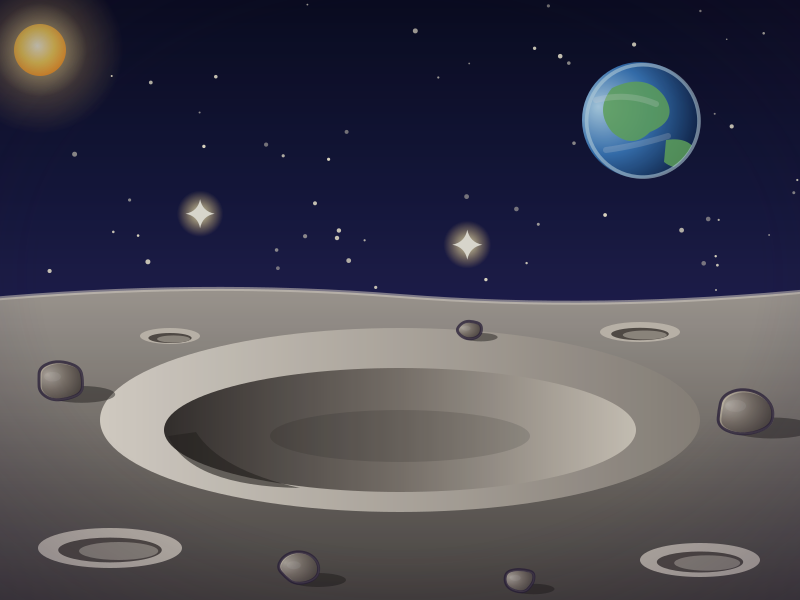
Colour in: a crater on a rocky world
A crater on a rocky world
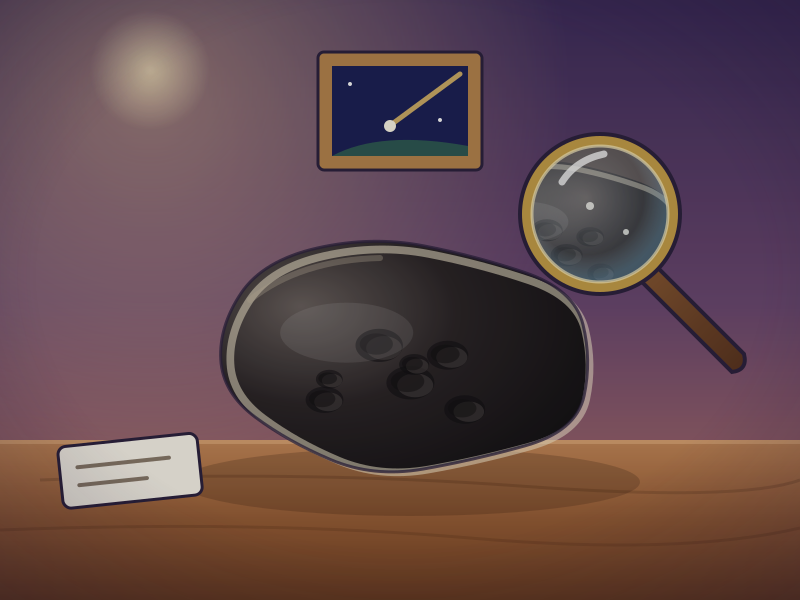
Colour in: a meteorite and a magnifying glass
A meteorite and a magnifying glass
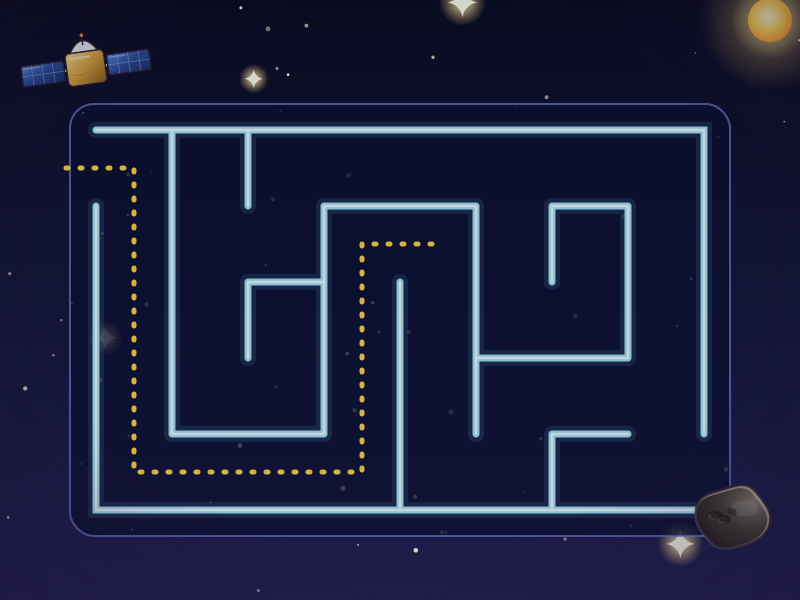
Space maze
Steer the spacecraft to the asteroid
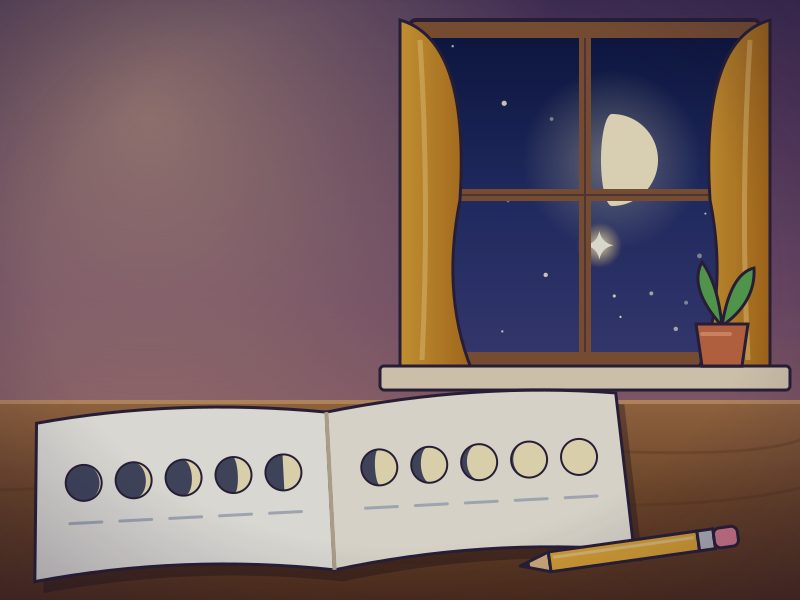
My Moon diary
Draw the Moon every clear night
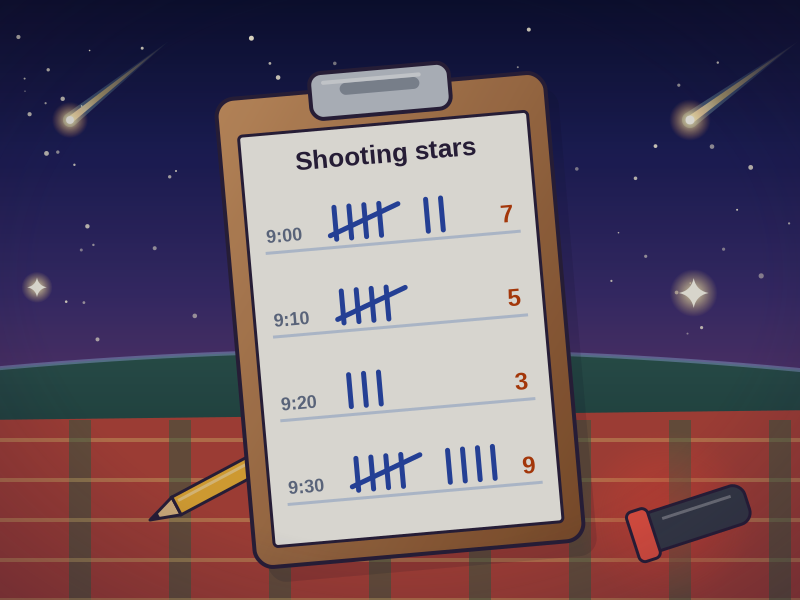
Meteor count sheet
Count shooting stars like a scientist
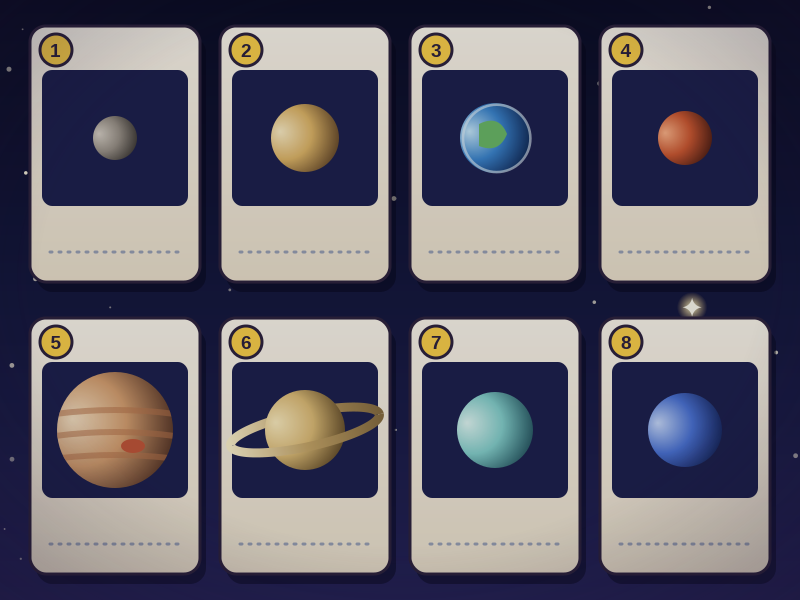
Name the planets
Write the planets' names in order
Is it a space rock?
Found a rock that might have fallen from space? Learn three simple checks to try with a grown-up.
Games
Family quiz
Pick the Kids level for picture questions.
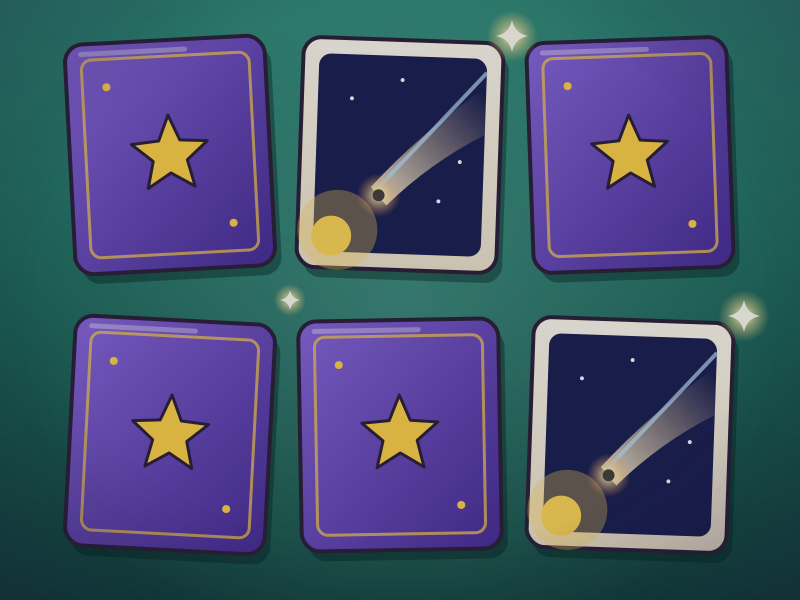
Memory match
Flip the cards and find the pairs.
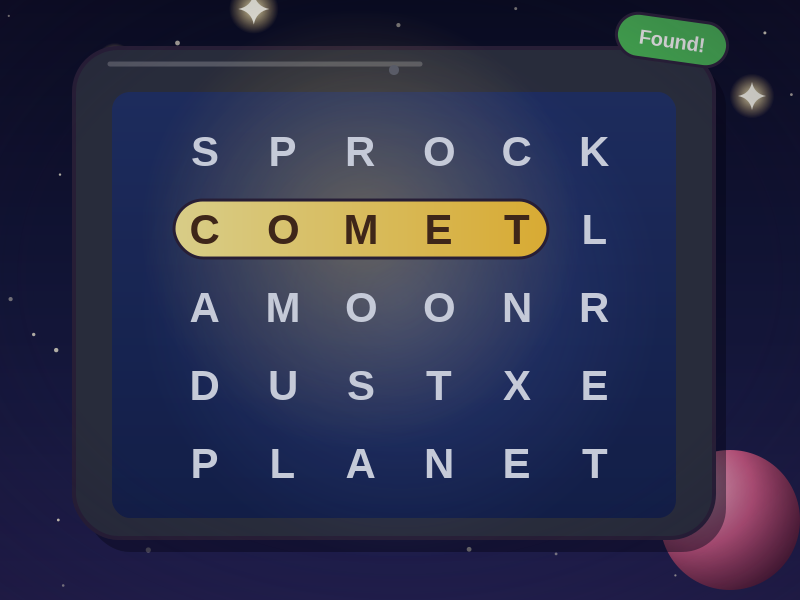
Word search
Hunt for hidden space words.
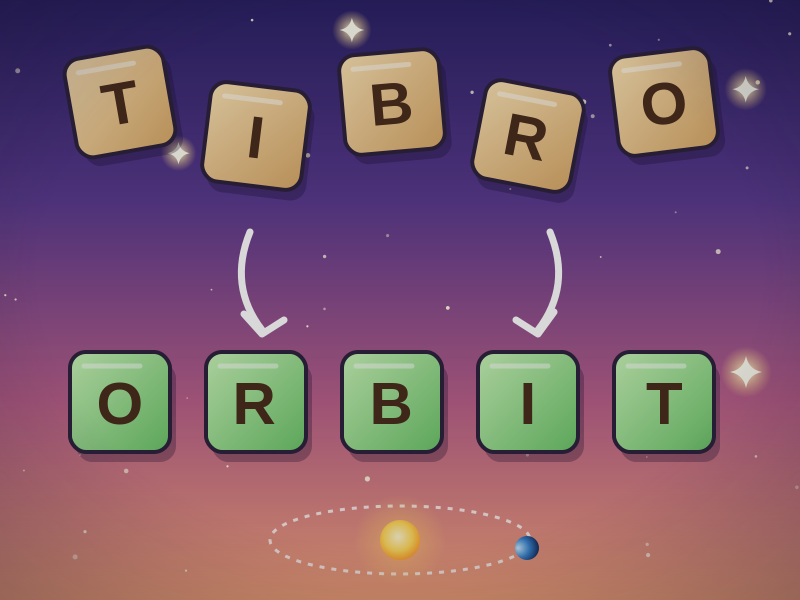
Word scramble
Unscramble space words, with a clue.
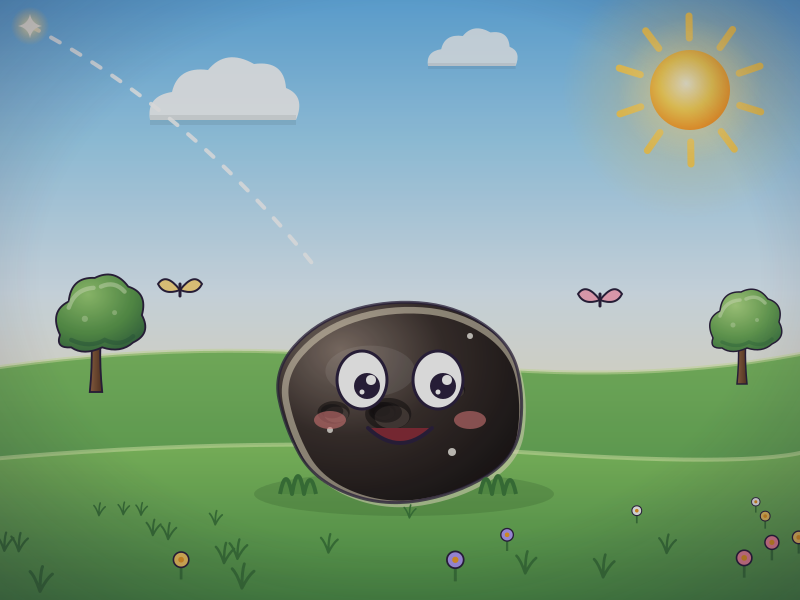
Pip the Pebble
An interactive picture book about a tiny rock's journey to Earth.

All games
Every game on the site, for every age.
Build a meteorite
Build your own meteorite from stone or iron, a dark crust, metal flakes and chondrules, and read a true fact about each part. What you make stays private, on your device.
Quizzes
A quiz of ten questions for each age group, with a short explanation for every answer. There is no clock, and nothing is saved.
The Space Rock Star test
Fifteen questions about the stories and answers in the Kids' zone. Get 12 right to earn your own Space Rock Star certificate.
My space-rock cards
Read stories, print colouring sheets and play games to collect 16 picture cards of real space rocks. Your album is private: the cards are kept on this device, and nobody else can see them.
My museum
Be a museum keeper. Put famous meteorites on your own shelf and read their labels. Older explorers can sort them into stony, iron and stony-iron. Your shelf stays private, on your device.
Look up tonight
The sky calendar shows the Moon's shape, the next meteor shower and which planets you can see each month, with the best nights to watch from the UK. The shooting-star countdown counts the nights until the next big shower.
The free Key Stage 1 and Key Stage 2 courses turn these topics into lessons with quizzes and a certificate. Older children can move on to Start here. Teachers will find free lesson plans, worksheets and science-fair project ideas by age in the teachers' area. For experiments to do together, the hands-on activities marked as good to do with children need nothing sharp, hot or harmful. Children's pages on this site show no adverts and collect no names.
Safety: go out at night only with an adult; never look at the Sun; and never lick, scratch, break or heat a rock you think might be a meteorite.